
Pro underwater videography training by Liquid Light Studio
Our Pro Underwater Videography Training in Koh Tao is taught by Liquid Light Studio, a professional underwater media team working across commercial, documentary, and broadcast-level projects.
This training is designed for divers who want to move beyond casual filming and learn how professional underwater video is actually planned, shot, and edited — in real dive conditions, with real assignments.
Hosted at Echo Divers Koh Tao, the course combines serious videography training with calm, well-organised diving in one of Thailand’s best locations for learning underwater filmmaking.
What Pro Underwater Videography Training is really about
Where technique, awareness, and storytelling come together.

Professional underwater video isn’t about owning better gear.
It’s about control, awareness, planning, and consistency.
This course focuses on building those skills step by step — from how you move underwater, to how you approach subjects, to how you structure footage so it works in the edit.
The aim is simple: to help you film with purpose, not just collect clips.
Who you’ll be learning from
All Pro Underwater Videography Training is taught by Liquid Light Studio.
Liquid Light Studio is a working underwater media team with experience across commercial, documentary, and broadcast-level projects. That background shapes how the training is delivered —
calm, structured, and focused on real-world standards rather than quick results.
The course is hosted at Echo Divers, combining professional videography training with a well-organised, supportive dive-centre environment.
What you’ll learn
This Pro Underwater Videography Training focuses on the full workflow — not just filming.
You’ll learn how to:
Set up and control video cameras underwater
Maintain stable buoyancy and body position while filming
Work with manual white balance, lighting, and colour
Plan shots and sequences rather than filming randomly
Film both underwater and on land
Edit projects using Adobe Premiere Pro
Organise footage and complete videos from start to finish

PRO UNDERWATER VIDEOGRAPHY TRAINING OPTIONS
Basic Underwater Videography
2 days · 4 dives
A practical introduction to filming underwater.
This course focuses on the fundamentals — camera handling, buoyancy for filming, and basic shot composition.
It’s designed to help you build good habits from the start and feel comfortable filming during real dives.
Afternoon sessions introduce basic video editing,
using footage from your own dives.
Advanced Underwater Videography
7 days · 14 dives
The advanced course develops more deliberate, cinematic filming skills.
You’ll work on planning shots, approaching subjects responsibly, using manual white balance, and applying filming techniques that improve flow and consistency. Editing sessions go deeper into colour correction, multi-clip workflows, and professional editing practices.
This level is ideal if you want your footage
to feel more intentional and polished.
Pro Underwater Videography Training
26 dives
The Pro course is designed for divers who want to work toward professional-level underwater videography.
It combines intensive filming, real-world assignments, and structured editing sessions. You’ll film both underwater and on land, take responsibility for full sequences, and produce longer-form edits that reflect professional workflows.
The course includes producing a 10–12 minute edited video,
completed and reviewed on the same day.
Broadcast Documentary Training
4–6 weeks · unlimited dives
This long-format course is aimed at videographers ready to produce a complete documentary.
You’ll work through the full production process, from concept development and story structure to filming, narration, and final edit. Unlimited dives allow the time and flexibility needed to capture a broadcast-quality project.
This option requires strong diving skills, patience,
and long-term commitment.
Requirements for Pro Underwater Videography Training
To join the underwater videography courses, you’ll need:
Minimum age: 10 years old
Medical fitness: You must be fit to dive and able to complete a standard diving medical form
Minimum certification: Open Water Diver
Pro course: Advanced Open Water Diver (or equivalent)
Broadcast Documentary course: Rescue Diver (or equivalent)
Recent diving experience: A dive within the last six months
(A short Scuba Review can be arranged if needed)
Good buoyancy and comfort in the water are important, especially at Pro and Documentary level.
accommodation options
If you’d like to stay close to the dive centre, we can help with accommodation options around Echo Divers.
We work with a small selection of nearby places and can point you in the right direction based on your budget, length of stay, and course schedule.
Most training dives run on the normal dive schedule, making it easy to combine photography with fun dives, courses, or time to relax on the island.
Book YOUR Pro Underwater Videography Training!
Because courses are taught privately and some options require longer time commitments, we recommend getting in touch before booking so we can confirm dates and help you choose the right level.
If you’re unsure where to start, just send us a message — we’ll talk it through and keep things simple.
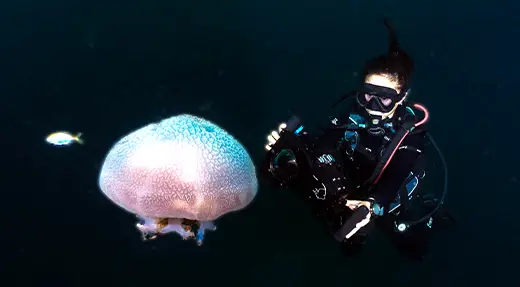
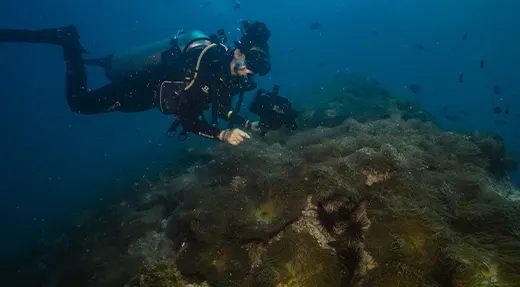
Pro Underwater Videography Training in Koh Tao
Professional training without the pressure.
Price range: ฿10,000 through ฿100,000
Frequently Asked Questions
Do I need previous videography experience?
Some basic familiarity helps, but it’s not required. The training builds skills progressively and focuses on developing good habits from the start.
Is this course taught one-to-one?
Yes. Pro Underwater Videography Training is delivered privately, allowing the pace and focus to match your experience and goals.
Is filming and diving equipment included?
Yes. All filming and scuba diving equipment needed for the course is included.
Will I learn video editing as well as filming?
Yes. Editing is a core part of the training, using Adobe Premiere Pro.
Can I fly after my last dive?
The general rule for flying after diving is to wait 12 hours after one dive, and 18 hours after two or more dives. If you went over your no decompression limits, or missed a safety stop on the dive, it is advised to wait 24 hours.
Can I use my own camera equipment?
Yes. If you have your own setup, you’re welcome to use it, and we’ll help you configure it properly.
Didn’t find the answer you were looking for?
We’re here to help!
Send us a quick message and our team will get back to you as soon as possible — whether it’s about your course, booking dates, accommodation, or anything else.